
The origin of symbol @ in a document sent from Seville to Rome in 1537

Origin @

An Italian academic claims to have traced the @ symbol to the Italian Renaissance, in a Venetian mercantile document signed by Francesco Lapi on May 4, sent from Seville to Rome, describing the goods and treasures arriving on a ship from the Americas to Spain 1537.

The document is about commerce with Pizarro, in particular the price of an @ of wine in Peru; @ meant amphora (Italian anfora; Spanish and Portuguese arroba). Currently, the word arroba means the at-symbol and a unit of weight.

In this usage, the symbol represents one amphora, a unit of weight and volume in the “each” sense, i.e. “2 widgets à £5.50 = £42.00” is the accountancy shorthand notation in English commercial vouchers and ledgers to the 1990s, when the e-mail usage superseded the accountancy usage. It also is so used in Modern French and Swedish; in this view, the at-symbol is a stylised form of à that avoids raising the writing hand from the page in drawing the symbol; this compromise between @ and à in French handwriting is in street market signs.
Wikipedia

Seville prepares Corpus Christi

Corpus Christi in Seville will be on 11th June, but the city center has begun to prepare and decorate the streets.

The Music Band will inaugurate the Corpus festivity on 10th with a concert dedicated to the opera that will take place in San Francisco’s Square. Other activities are the concerts of six musical groups playing in Sierpes’ street on friday 12th and saturday 13th.

The Town Hall takes upon the decoration of the procession tour with flowers and plants in the altars and the arcades in San Francisco’s Square.

The procession tour will come from the Cathedral, San Francisco’s Square, Sierpes’ street, Cerrajeria’s street, Cuna’s street, Salvador’s Square, Francos’ street, Placentines’ street, Virgen de los Reyes’ Square and coming back to the Cathedral.

El Correo de Andalucia

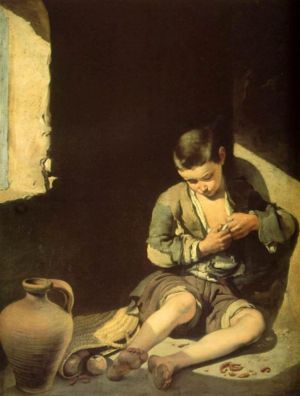
Louvre’s Museum will lend Murillo’s picture to Seville

the-young-beggar by Murillo

The picture Young beggar, also known as The lousy, one of the most popular works from Murillo (1617-1682) and one of the treasures of Louvre’s Museum, could be admired in Seville in 2010. A great exposition dedicated to the pictures of Murillo’s young time will arrive to Seville’s Museum of Bellas Artes in February.
The exposition is dedicated to young Murillo between 1640 and 1655 and it will show 40 pictures. This is the period in which Murillo is formed as artist and the exposition will attend on the period when Murillo focused his attention on the children living in the streets in Seville.

Free counter and web stats